

-

 Sold outBlack Crown Special MagicSale price € 201.61 Regular price € 322.59
 -

 -43%Nox AT10 GENIUS Attack 12K ALUM Xtreme 2026Sale price € 206.64 Regular price € 362.93
 -

 -41%Nox EA10 VENTUS HYBRID 12K Xtreme 2026Sale price € 201.61 Regular price € 342.76
 -

 -35%Adidas Metalbone 2026Sale price € 252.02 Regular price € 393.17
 -

 -40%Nox AT10 GENIUS ATTACK 18K ALUM 2026Sale price € 211.68 Regular price € 352.84
 -

 -41%Bullpadel Vertex 05 Hybrid 2026Sale price € 216.72 Regular price € 373.00
 -

 Sold outBullpadel Neuron 02 2026Sale price € 211.68 Regular price € 352.90
 -

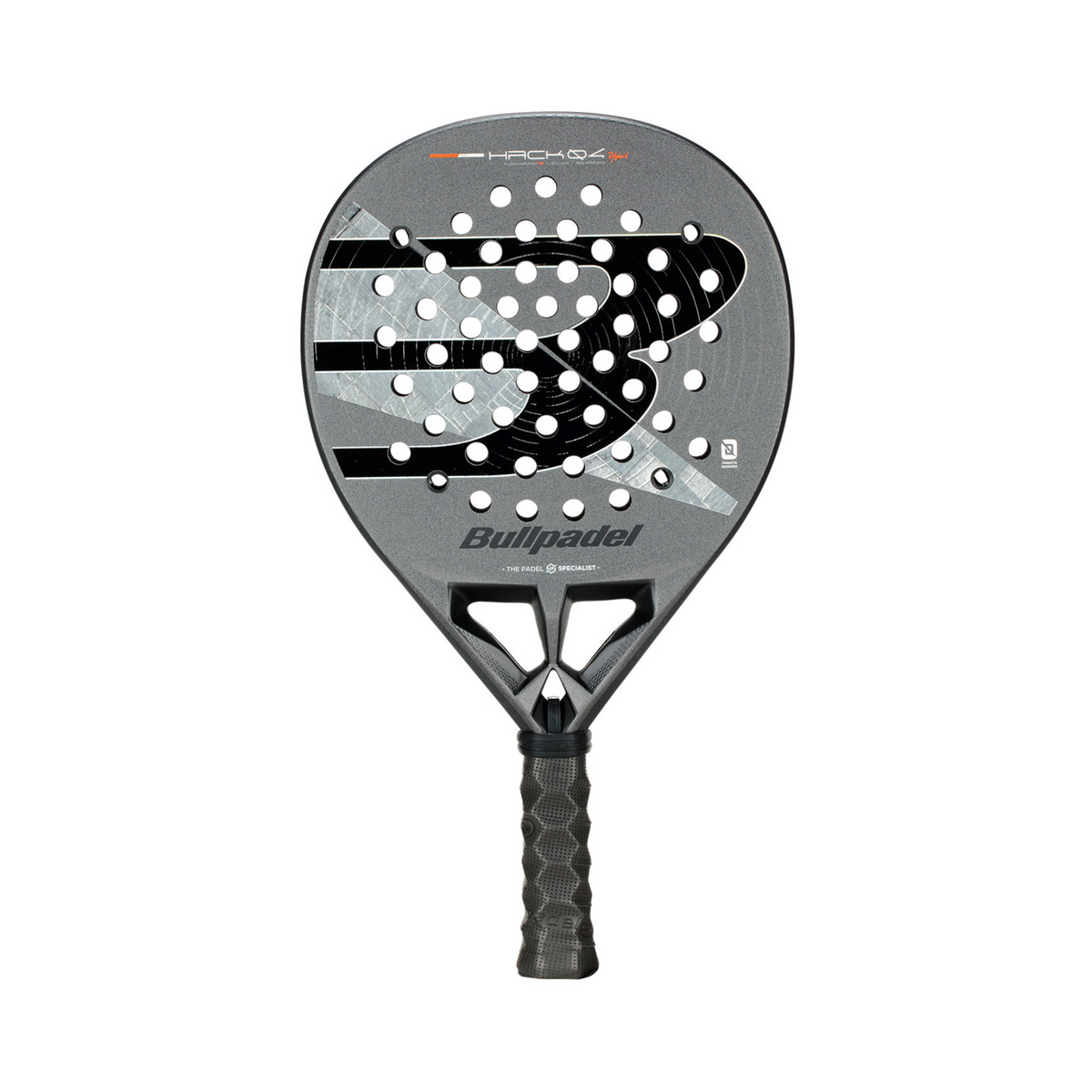 -45%Bullpadel Hack 04 Hybrid 2026Sale price € 191.52 Regular price € 352.90
 -

 Sold outBullpadel Vertex 05 2026Sale price € 226.81 Regular price € 373.06
 -

 Sold outBullpadel Flow Legend 2026Sale price € 171.35 Regular price € 282.26
 -

 -37%Adidas Metalbone HRD+ 2026Sale price € 246.98 Regular price € 393.17
 -

 -42%Siux Fenix Pro Black 2026Sale price € 201.61 Regular price € 352.84


Best padel rackets for advanced players 2026
At advanced level, the conversation about rackets shifts fundamentally. You know the sport. You have a defined playing style, a specific position on court and a clear sense of what your game needs from a racket. The question is no longer which shape or weight category suits your level in general. The question is which specific properties match the way you actually play and the physical realities of your body.
Advanced rackets give more when you get it right. They punish more when you do not. And they place significantly more load on the arm, particularly diamond models with hard foam and high balance. At this level, the racket choice is not just about performance. It is also about managing injury risk over a career of intensive play.
How advanced racket selection is different
At beginner and intermediate level, racket advice can be reasonably generalised: round for control, teardrop for all-round, hybrid for power. At advanced level, these generalisations break down. An advanced player who plays primarily from the back of the court and values defensive precision may choose a round racket with hard foam specifically because of the control it gives them. A professional doubles player who spends most of their time at the net may use a diamond racket for maximum overhead power. An advanced player managing a history of elbow problems may deliberately step back to a softer, lower-balance model.
The right advanced racket is the one that fits your game, not the one that sits highest in the performance hierarchy. At PadelShop.com we measure every racket with professional equipment and advise based on what we actually observe in your technique.
The four shapes at advanced level
Round: control, precision and arm protection
Many advanced players choose round rackets deliberately. An advanced player with a round racket is choosing a playing philosophy: building points patiently from the baseline, using technical precision to outmanoeuvre opponents rather than overpowering them, and protecting the arm over a long playing career. Hard foam in a round racket adds direct response without the arm load of a head-heavy shape.
Round rackets are not only for beginners. This misconception is worth correcting directly. Top players like Agustin Tapia have competed at the highest level with round rackets. At advanced level, the choice of round is a deliberate tactical and physical decision.
Teardrop: versatility at the highest level
Teardrop remains the most popular shape at advanced club level. The mid-high sweet spot rewards the more precise ball contact of an advanced player. Advanced teardrop players typically choose harder foam and rough surfaces than their intermediate counterparts, to get more direct response and more spin on deliberate shots. The StarVie Raptor, Bullpadel Vertex, Babolat Viper and Wilson Endure Pro are among the most used advanced teardrop models.
Hybrid: power and adaptability
The hybrid shape is increasingly popular at advanced and competitive level because it combines genuine attacking power with a sweet spot that is more forgiving than a diamond. Advanced players who are comfortable generating their own pace and want to finish points aggressively without the full technical demands of a diamond often settle on a hybrid as the best long-term choice. The Adidas Metalbone, SIUX Diablo, StarVie Black Titan and Bullpadel XPLO are among the most prominent advanced hybrid models.
Diamond: maximum power for technically consistent players
Diamond is the shape most associated with performance padel, but also the most misunderstood. A diamond racket requires that you consistently hit the small, high sweet spot with a technically sound and physically strong swing. When you can, the results are excellent. When you cannot, the ball goes somewhere unexpected and the arm pays for it.
Diamond rackets place the highest rotational load on the elbow and wrist of any shape. Players who use diamond models exclusively through a multi-year padel career significantly increase their cumulative arm load. This does not mean diamond rackets should be avoided, but the choice should be made with full awareness of what it costs the body over time.
Diamond models worth considering: NOX AT10 series, Bullpadel Vertex 05, Adidas Metalbone Pro, SIUX Fenix, Babolat Viper Technical, Varlion Bourne Elbowcare.
Advanced racket properties in detail
Foam: hard foam and its consequences
Most advanced players use hard foam. The direct, explosive response on well-struck shots is genuinely different from medium or soft foam, and at this level the technique to hit the sweet spot consistently is present. The cost is more vibration into the arm on every shot, and faster core fatigue over time. Hard foam cores typically need replacing after 12 to 18 months of intensive use.
Some advanced players with arm sensitivity deliberately choose medium-hard or even medium foam for long-term health reasons. A well-chosen medium-foam racket can outperform a hard-foam model for a player whose technique thrives on feel and touch rather than explosive response.
Carbon quality and construction
Higher modulus carbon, indicated by 12K, 18K or 24K designations, is stiffer, more responsive and generally lighter for the same structural strength. These constructions give more direct energy transfer on impact. The Adidas Metalbone line, NOX AT10 18K, SIUX Pro models with TeXtreme carbon and several top Bullpadel and StarVie constructions are examples of genuinely high-specification carbon engineering.
Surface: rough for spin, 3D for durability
Advanced players almost universally use rough or 3D textured surfaces. At this level, spin is a tactical weapon rather than an occasional bonus. Some players prefer a sandpaper-type rough for maximum friction; others prefer a 3D moulded texture for durability and consistency across different playing conditions.
Injury management at advanced level
The most important racket decision at advanced level is not which model maximises your power. It is which model allows you to keep playing at a high level over years and decades without breaking your body. Advanced and competitive players who play three, four or five times a week with high-balance, hard-foam rackets accumulate arm load very quickly.
Varlion's Elbowcare technology, Cork's anti-vibration system, StarVie's Anti-Vibe and Wilson's Soft EVA constructions all reduce vibration load at impact. Choosing a teardrop or hybrid instead of a diamond, or using a medium-balance rather than high-balance model, makes a measurable difference over a full season of play. At our Experience Center we measure swing weight and balance alongside sweet spot position to identify which properties genuinely match your technique and physical condition.
Why the Experience Center matters more at this level
At advanced level, we strongly recommend testing before buying rather than ordering purely on specification. A session at the Padel Experience Center in Alphen aan den Rijn typically involves playing with three to five rackets under observation, measurement of your most natural swing characteristics and a direct comparison of how each model responds to your specific technique. We do not publish exact measurement values to prevent competitors from copying our methodology, but we use them as the primary basis for every recommendation we make.
- Racket test at our Padel Experience Center in Alphen aan den Rijn
- Professional measurement: sweet spot position, hardness and swing weight
- Order before 16:00 and your racket ships today
- Free delivery from 50 euros
- Personal advice via WhatsApp, phone or email
Frequently asked questions
What is the best padel racket for advanced players?
There is no single best advanced racket. The right racket depends on your playing position, dominant playing style, physical build and injury history. An advanced baseline player focused on control will make a completely different choice from an aggressive net player. We advise based on what we observe in your technique and measure in the racket.
Is a diamond racket the best choice for advanced players?
Only if your technique consistently delivers the ball to the small, high sweet spot and your physical conditioning can support the arm load it generates. Many excellent advanced players use teardrop or hybrid shapes and achieve superior results compared to playing with a diamond that does not suit their style.
How often should an advanced player replace their racket?
An advanced player who trains and plays intensively typically needs to replace the core every 12 to 18 months, even if the frame remains intact. The sign is a gradual loss of response and feel on shots that used to feel direct and decisive.
Are expensive rackets always better?
No. The right model for your technique and physical condition will always outperform the most expensive model that does not suit you. Budget for the right fit, not the highest price point.
How do I know if my racket is causing my arm problems?
If your elbow or wrist is consistently sore after sessions, the racket is a likely contributor. The most common culprits are too high a balance point, too hard a foam core, or too heavy a total weight. Come to the Experience Center for a measurement session and we can identify the specific mismatch between your racket and your physical condition.


